The long version
Here's the bit that usually gets skipped. I first wanted to play the keyboard when I was at school, probably year seven or eight, I can't remember exactly. My parents bought me a block of five or ten lessons. My sister had a keyboard at home she'd never really played, and I was interested in a way. Unfortunately, I didn't find the lessons that interactive, and I was also quite bad at doing my homework, so I didn't enjoy the conflict of coming to a lesson and not having improved. I'd come from a background where I was usually pretty good at picking things up, sport especially. I had good hand-eye coordination, and if I started a new sport I'd have transferable skills. I didn't really have that with piano. I didn't see progress quickly, so my interest waned and I dropped it. I've not really been that musical throughout my life, I guess. Or that's what I told myself.
That frame stuck for about twenty years. Every time I saw a piano, in a friend's house or an airport lounge or a hotel lobby, I'd think “oh yeah, it'd be cool to be able to play that.” But I never did. Sport took over my life instead, cricket and hockey especially, they pretty much became my weekends and my whole practice routine.
Music was still a constant, it just came through listening rather than playing. My dad had a wide record collection, then CDs, and my taste got shaped around those growing up. I ended up with a pretty eclectic mix of influences. Radiohead, Jimi Hendrix, a free compilation CD of romantic-period classical that came with something I honestly can't remember. Then nu metal came onto the scene and that properly took over my passion for a while. I discovered Ludovico Einaudi at university and put Divenire on repeat when I first heard it, thinking this is stunning. I saw him live on London's Embankment and was completely blown away. The piano bits of my listening were always the ones I came back to.
Why, actually?
As I got older I stopped playing competitive sport, which freed up a chunk of my week. Here's something I've learned about myself, I'm not great with hobbies. I pick things up, get super into them, and then drop them once the initial excitement wears off. I can't play computer games because their addictive nature is too much for me, I end up thinking about them when I'm not playing, and that becomes quite a toxic environment for my brain. So I've had to learn to be selective about my hobbies, to make sure they have a positive influence on my life rather than a toxic one, and don't just keep my resting brain busy.
Just before turning 40, a few things lined up. I'd been to see my dad playing at one of his folk circles. It's something he's picked up in his retirement, where he's really found a community in playing with like-minded people and talking about the music they love. He plays guitar and sings, and he won't mind me saying he's not the most confident singer, but the room is safe and warm and everyone's there to connect over the music. Being a male in my late thirties, it's actually quite difficult to keep hold of friends and stay connected with people, and I'd always had sport as the vehicle for that. What I was seeing at dad's folk circles was that music could be another way in. I'm not always going to be able to play sport forever.
I've always wanted to play the piano. Let's do it.
My wife was a little sceptical in the nicest way, she knows my hobby pattern. So we compromised. I went on Facebook Marketplace, found a pretty cheap keyboard, drove to pick it up. The first thing I had to do when I got it home was give it a really good clean. The previous owner had stuck letter stickers on every key, and I'd already read that using those stickers takes away from your learning, you end up leaning on them rather than learning which key is which. So I pulled them all off. The residue was awful, it took me ages to scrub down before I could even play a single note.
The first few months
Then I just googled “beginner piano where to start,” and discovered there was just so much content on YouTube. I came across the Superhuman Piano guy, really charismatic, using the 1-5-6-4 pop chord pattern to get you playing songs fast. His thing was basically labelling a handful of keys in a video and saying “press this, now this, now this, now this,” and it'd come out sounding like a song you actually recognised in its simplest form. You could learn tricks like the Interstellar theme with one hand, that sort of thing. He was great at getting you excited about playing songs straight away rather than learning the instrument properly. I'm a bit older though, and I wasn't really looking to go to a party and impress people. What I wanted was more about doing it for me and connecting with the instrument itself, to understand what all these keys actually mean, not just play a quick sound-bite. Saying that, I've since shared some of these hacks with friends who have kids, because they make a really fun hook to get a child interested in the piano. Way better than starting on Twinkle Twinkle Little Star.
I set two parallel goals pretty early on. One fun, one serious. The fun one was Matt and Kim's “Daylight,” a really easy hook on the piano, and I remember after about a week I could play it. It wasn't very good, slightly out of time and probably wrong in places, but I could feel the music and it was close enough that I could recognise it. Matt and Kim have this really relaxed, unpretentious way of performing in their videos, lying around on beds with all sorts of instruments, and I just loved that energy. The serious goal was being able to play something by Ludovico Einaudi, “Experience” specifically. Pianote had a beginner version of it in their course and I got a bit obsessed. It was straight-up muscle memory really, I was watching Lisa Witt play it and memorising every finger position before I really understood the instrument at all. Honestly, I'd set Einaudi as a long-term goal and it surprised me how quickly I could get something like him sounding okay. That was a bit of a revelation for me, how accessible a piece that sounds complex can actually be if you can just hack the patterns into your brain on your own.
Pianote I'd happily recommend to anyone starting out. Lisa is a fantastic teacher, she made me feel like I was in a lesson with her rather than just watching a video back, which is rare. I don't really go back to it myself anymore, but I do still go back to some of the YouTube videos I discovered when I first started playing. I subscribed to Matthew Cawood's Monday Music Tips newsletter and I still read it today, really insightful stuff. David Bennett's theory channel filled in loads of the gaps. I probably Googled “how to practise piano” a hundred times and stitched my own approach together from everything I read.
After about three and a half months I realised what the actual problem was. I wasn't stuck on a piece, I wasn't plateauing really, I was just genuinely overwhelmed by the sheer amount of content out there. I wanted someone to shepherd me through the noise, basically, and help me work out where I should be spending all of my time. I wanted to get good fast, I'm bad like that.
Time-wise I had the hours. My wife had just started a new job at a bakery so she was up at 4:45 four mornings a week, Wednesday to Saturday, and I'm a morning person anyway, so I didn't want to be on a different rhythm to her. We like spending time together, so going to bed later than her didn't really appeal. I started getting up around 5:00, practising before work. Turns out my peak learning window is first thing in the morning, patience to burn, energised from sleep, no mushy post-work brain.
Josh
I went on musicteachers.com. I was a bit money-conscious about how I wanted to spend my money at that point, so I was looking at people on the lower end of the scale. I think I'm quite a difficult student honestly, I've got a strong understanding of what motivates me and what gets me to work well, and I'll push back when something isn't landing. I agreed to do a trial lesson with a guy called Josh, based up in Scotland from what I remember. Really nice guy, a lot younger than me, but you could tell he was super passionate about music. I even looked him up on YouTube on his own personal account and he was talking about wellness stuff, which resonates with me.
Josh was predominantly a guitarist and by his own admission wasn't the greatest pianist. That was fine for a while, what I really needed was the dialogue. Someone to explain intervals and theory and how the notes connected to each other. Pianote does that brilliantly one-way, but what I'd been missing was being able to stop the video and ask why. Josh gave me that.
He started us on Adele, which I like, but I wouldn't actually choose to play Adele in my own time. I told him that, not because he'd done anything wrong, but because I think as a learner it's important to be clear about what motivates you. Your teacher is trying to do their best work, and they can't if you don't give them the feedback. Josh really appreciated the honesty. About a month and a half into our lessons he admitted he was going to have to push his own piano hard to stay ahead of where I was heading, and we both knew where that was going.
I booked one last lesson specifically to break up with him. Didn't even set up the piano. I just wanted to talk to him face-to-face, I'd really enjoyed the lessons and it was important to me to be genuine with him. It felt like breaking up with someone at school, the same sort of fear of doing it, and at least this time I didn't have to write out a script like I did on the phone breaking up with someone when I was younger. We had a really good breakup conversation, he advised me on where I should go next based on what I wanted to get out of things, and I think he also appreciated the fact that I didn't just send him an email. Yes, I paid for a lesson that I didn't learn any piano at, but Josh had imparted his time and knowledge and he deserved it.
Josh, if you're ever reading this, thanks a lot. Really appreciate you being my first teacher, and I love what we learned together.
The spreadsheet
Around the time Josh and I parted ways, I started the spreadsheet. 1 June 2023 according to the timestamp on it. I work in Professional Services, I'm a Director now but I've been a project manager for most of my career, and everyone on my team does timecards as part of what you do in a professional service organisation. I'm extremely used to tracking time, I can see how valuable the data can be. I really love data, it's a weird thing to say, but being able to visualise or see where you've gone or how well you've done is properly interesting to look back on.
So what I ended up with was basically me applying what I already know how to do, project-managing delivery, to the new thing I was trying to learn. Matthew Cawood's writing on deliberate practice gave it the rest of its shape, along with a guy called Jazer and a handful of other piano teachers and bloggers who kept showing up in my research. They all said variations of the same thing. Don't go through the motions, have intent in every session, break pieces down into sections and work the hard sections properly. That maps exactly onto how I'd learned sport over the years, you know when you're training and practising you need to have intent, you can't just go through the motions. You need systems to achieve growth, having a growth mindset alone isn't really enough.
I printed a weekly sheet each week. It had a goal for the week at the top, and then columns for sight reading, technique, scales and arpeggios, musical theory, repertoire, and playing for fun. It ran Saturday through Friday, and I'd use a pen to write down how many minutes I'd spent on each activity as I went. Feedback questions on the reverse side, what was your focus, was the plan effective, that sort of thing. Repertoire tracking on the back page. I guess it looked a bit like a well-run team's sprint planner, because of course it did.
Around the same time I upgraded to a weighted keyboard, second hand off eBay. The seller had dropped it so the case was cracked, and they were selling it really cheap. Absolute bargain. Believe in recycling, this was important to me. It was a Casio CDP, 110 or something like that I think. The crack means the lower notes vibrate and distort a bit, so with headphones it's fantastic and without them it's interesting. It's still in my shed, actually, if anyone's in the market for a slightly cracked digital piano.
James
James Hawken was my second teacher. A Cornish man, a wonderful human being, and we really hit it off on a personal level, which was important to me. I needed to feel in a safe environment and he provided that. The other thing about James was that he'd previously worked with children on the spectrum, and what that meant in practice was that he could handle me being obsessive, me wanting to do things my own way. He knew when to push back on me and vice versa. We built up a brilliant working relationship really quickly.
I decided pretty quickly I didn't want one lesson a week. I wanted an hour on a Wednesday and then a half-hour check-in on a Friday, and I'd do it that way so that we could focus deep on something mid-week and then course-correct before the weekend. Josh's parting advice had included doing the grades for structure, and James assessed me at Grade 2 level straight away. We worked through Grade 2, then Grade 3, then Grade 4, not officially, no exams sat, just mock assessments he'd record. By the way, as soon as he pressed that red button to record, my hands would suddenly feel heavier. If you're doing real exams, make sure your teacher records you in practice, the jeopardy is a useful variable to train under.
I played my first public piano in San Diego airport on a work trip. My head office is in San Diego and I was over there for two weeks, away from my keyboard for a while, which was quite difficult. So when I saw the piano at the airport I couldn't help myself. I played for probably an hour or an hour and a half, I don't know enough piano to be playing for that long but I was just so happy to be back at one. A colleague filmed me doing “Experience,” but he didn't quite catch the ending because he wanted to go and get food, and I hadn't really warned him how long the piece was going to go on for.
The public piano thing had already been a rule for me by that point, actually. If I see a piano, I sit down and play something. It's not really about performing, I'm not into that at all. It's more that every piano has its own character, some of them are in tune and some definitely aren't, and they all feel slightly different to play. Same rule applies in my own house. Seeing the piano means sitting down for five minutes, even when I'm busy.
Music for me is about presence, not performance.
I did have one other public piano moment, at Melbourne airport on a holiday with my wife. Someone clapped after I played something, and I got so embarrassed that I couldn't actually carry on, I just had to stop. I did say thanks though.
After Grade 4 I started to doubt a little bit. I was leaning too hard on memorising scores, it's one of my strengths, but it was masking that my sight reading was still pretty terrible. We decided to maybe go for an actual official grade this time, and I realised I'd have to do everything on catch-up, scales, arpeggios, reading. I also started to question whether grades were even what I wanted. Some of the set pieces, looking at you Spooky Wooky Hollow, I was never going to play outside of grade submissions. What did I actually want from this?
It was actually James who said to me, you know, maybe you need to look elsewhere and have another fit and see if you get some more inspiration. He is such an amazing man. I could have carried on with him happily and I still would have been learning loads, but he suggested I explore because he could see I was hitting something different. Who does that.
Singing, Auris, and how I found Ellie
I wanted to learn to sing. Not in public, this is all completely for me, I'm not really a performer and I don't like the limelight. I don't do social media or anything like that, I have quite a personal private life. But I'd realised that actually playing an Einaudi piece I've loved and connected with is a whole new experience, completely different to just listening to it, and I was curious what singing songs I loved would do.
I tried a couple of online singing trial lessons and found them really awkward. Not the teachers, the actual exercise itself. I'm a terrible singer, I just never sing, so it's a completely untrained thing for me. When you've got an instrument between you and a stranger there's some separation, but when you arethe instrument, that's very disarming. I didn't know how to control my voice, hadn't connected with my head voice in any way, and opening up that side of me to someone on Zoom felt like more vulnerability than I'd signed up for.
I messaged a teacher called Auris about singing lessons and he sent me one of the most interesting replies I've had from a prospective teacher. He basically said he didn't think I should do singing lessons via Zoom, the medium has this personal quality that doesn't really translate. Which was exactly what I'd just experienced. I was already intrigued by Auris anyway because he was also a jazz pianist, and my practice had neglected improvisation completely, improv is pretty much the opposite of how my brain works. So I asked him for a piano trial instead and went that route.
Somewhere in the middle of all this, a local teacher I'd had a discussion with said I wasn't really the right fit for her, and she pointed me at Ellie. Ellie Moorhouse, who runs a music studio locally but does all her lessons online. I thought I'd still have an introductory call rather than going straight into a lesson, and we had a quick chat and decided we'd go ahead with giving singing and piano a go together. What really appealed to me first of all was that she had a Google doc for me to document everything that we're doing. It felt nice and structured and there was a clear pathway for me to go forward. We spoke about goals and intent as well, so my learning style was pretty well aligned with her teaching style. That was the click. My spreadsheet had finally met its teaching counterpart.
I ran Ellie and Auris in parallel for a few weeks, because the lessons with Auris were still interesting, sort of jazz and improv, and it was quite different from Ellie's style. I was up front with them both though, I said look, I'm having lessons with multiple teachers at the moment because I want to make sure I've got the right fit. It felt more and more that Ellie was the right fit. So I had another breakup conversation with Auris, which he understood and was super supportive about. We sort of left it that maybe in the future I'd love to come back and continue the jazz pathway, because it's still something that interests me.
Here's where Mewstro actually began
I'd shared the Google Sheet with Ellie on my first introduction because I thought it was important to show her what my learning style was and what I was like as an individual. She instantly thought it was brilliant, loved that I was so intentful with my learning. I think she may have used the phrase “ideal student.” Little did she know she'd end up being asked loads of questions about teaching apps and tracking software for her students further down the line. What was real was that she immediately got the approach, and our lesson rhythm locked in around it.
A while later I started wondering if the spreadsheet should really be an app. At work I use an app to track time, my team uses one too, and it just felt like it would be cool if I could do this on my phone. Tap a button, session starts, session ends, no manual adding up at the end of the week. So I started building, for me, nothing else. I decided to call it Skald, which is basically a Nordic poet kind of figure. I actually took the name from Dark Ages of Camelot, an MMORPG I played way too much of. The Skald was a musician-warrior class on one of the factions, and I'd also played the Minstrel on another faction, both music-related. At the time I was deep in a Sleep Token obsession, still am, they're one of my favourite bands. They've got a real aesthetic and they've built their own world around it, and I wanted to lean into that. Heavy metal energy, built entirely for me.
I was in a lesson with Ellie one day and I was like, oh, can I show you something? Almost as an aside. I showed her Skald running on my phone. She said,
This is really cool. I think some of my other students would like this.
Between that lesson and the next one I was like, well, I've got this heavy metal theme going on here, I'm not sure all of Ellie's students would like that. So I added a couple of other themes. A calmer green one I called Maestro, and a re-skin which was a bit more neutral. I also thought, while I'm at it, I'll create a theme in Ellie's studio colours, because that would just be quite funny to show her. She saw that and was like, okay yeah, let's start thinking about giving this to my students.
That was a bigger conversation. We started talking about what she would actually find interesting or useful for her students. The leaderboard idea came from those discussions, she wanted a way to set up competitions across her studio. I kept thinking about what she'd said, and the logic shifted. If Ellie finds this useful as a teacher, other teachers are almost certainly going to find it useful too. Going back to the fact that I love data, I can only imagine that week-to-week teachers don't really know what their students have got up to between lessons. If I could help with that by gamifying it and adding streaks, the app I'd built for students was really an app for teachers.
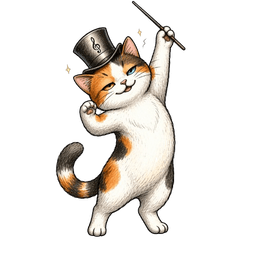
The other practice apps I looked at were solid on features but I thought they kind of lacked personality. I wondered whether a mascot might help. I was rolling the name Maestro around and realised Maestro plus meow gave me Mewstro, and that just stuck. The word came first, the cat followed.
Where I am now
Still having lessons with Ellie, still learning piano and singing. We're working towards Grade 7 over the next couple of years. I took the Grade 5 repertoire through with her but didn't sit it officially, and we've parked Grade 6. Developing Mewstro has definitely taken a bite out of the time I used to put into practice, so Grade 7 might be a few years out, I don't really know. But I'm loving still being able to connect with and play the piano.
The public-piano rule is definitely still active. Only this week I played at Amsterdam airport, they've got a nice piano there, and my flight connection time was pretty tight, but I still found the time to sit down and play. My train from Oxford station was delayed yesterday, so the staff there got another rendition of “Experience.” They've probably heard it quite a few times from me by now, poor things. I don't commute regularly, but every time I do I go and sit down at the piano and play.
Ellie is my first teacher turned first customer, she's my co-creator, and she's the reason Mewstro exists at all.
Built by someone who wanted to practise more and found the structure to actually do it, alongside the piano teacher who helped me get there.